
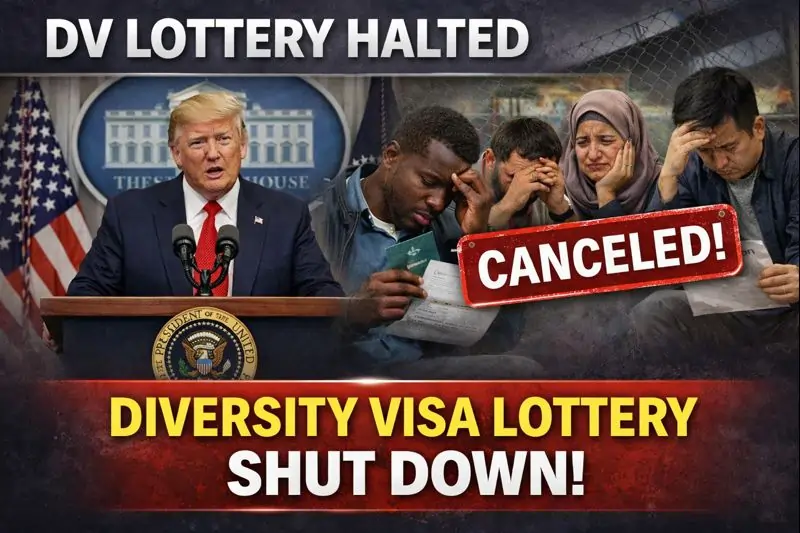

Late last week, the U.S. government suspended the Diversity Visa (DV) Lottery program in the wake of a tragic shooting incident. Homeland Security Secretary Kristi Noem announced on Thursday that she was immediately directing USCIS to pause the DV1 program at President Trump’s direction. This decision came after law enforcement revealed that the suspect in the Brown University and MIT shootings – a Portuguese national – had entered the U.S. through the DV lottery in 2017. Noem argued that “this heinous individual should never have been allowed in our country,” and cited the lottery as a security concern, vowing to ensure “no more Americans are harmed by this disastrous program”
Why Was the DV Lottery Paused?
Officials say the pause is a security measure following the revelation about the shooting suspect’s immigration path. The Diversity Immigrant Visa program – commonly known as the green card lottery – offers up to 50,000 visas each year to people from countries with low U.S. immigration rates, with winners selected randomly. All DV lottery winners undergo background checks, must meet education or work experience requirements, and attend visa interviews before receiving a visa. Despite these safeguards, the Trump administration has long criticized the program as not “merit-based” enough and potentially risky. In fact, President Trump previously called on Congress to end the lottery after a 2017 terror attack in New York City was committed by a DV entrant. (His first term also temporarily suspended the DV lottery in 2020 amid COVID-19, though that was reversed in 2021 by President Biden.)
In the latest response, Secretary Noem and other officials framed the suspension as necessary for public safety. Secretary of State Marco Rubio has likewise ordered a halt to issuing diversity visas “until we can be sure we know exactly who we are letting into our country,” according to a State Department spokesperson. The White House also noted that the administration has long sought to limit or end the program as part of its immigration policy goals.
It’s important to note that the DV lottery is established by an act of Congress, not just a policy that DHS can freely start or stop. The program was created by Congress, and it’s not clear under what legal mechanism the administration can order a pause. Most diversity visas are processed by the State Department, not DHS, so the announcement has led to some confusion about how it will be implemented. As of now, no formal written guidance or detailed legal memo has been issued by USCIS or the State Department to clarify the suspension. This lack of official instructions has left many lottery applicants uncertain about their fate.
Who Is Affected by the Suspension?
The sudden pause of the DV lottery program directly impacts thousands of hopeful immigrants around the world. Key groups who may be affected include:
- Winners of the DV-2026 lottery – People who were selected in the FY 2026 diversity visa lottery (entries that were submitted in late 2024) and are in the process of applying for their visas. It’s unclear if their interviews and visa processing will continue or be frozen.
- Applicants awaiting interviews or approval – Lottery selectees who have submitted their paperwork and are waiting for scheduled consular interviews or final visa approval now face potential delays.
- Families planning to immigrate through the lottery – Spouses and children of DV lottery winners, or those hoping to reunite with family via a lottery-based green card, may see their plans put on hold.
U.S. officials have not yet clarified whether those already selected will be allowed to continue the immigration process or if cases will be put on hold indefinitely. With the program on pause, many would-be immigrants are in limbo, unsure if their once-in-a-lifetime chance at a green card will proceed or be taken away.
Not Permanently Ended – But For How Long?
It’s important to emphasize that the Diversity Visa program has not been permanently eliminated at this point – it is on hold, pending further review. The administration has not announced how long the pause will last or if it intends to formally terminate the program. Past experience shows that previous suspensions of the DV lottery have eventually been lifted. For example, the program was paused during 2020’s immigration shutdown and later restarted when those restrictions expired. Any long-term shutdown would likely face legal challenges, since the DV lottery’s existence is written into law by Congress. Immigration law experts note that an executive branch move to effectively cancel a congressionally mandated visa program could be challenged in court on statutory grounds.
For now, however, the reality is that the DV-2027 lottery entry period has been delayed and not even started as scheduled this fall. The State Department had announced it would “announce the start date for the DV-2027 registration period as soon as practicable,” indicating an indefinite delay. With the new suspension, it’s possible that the DV-2027 lottery may not occur on the normal timeline at all.
Government agencies have offered few details or timelines to the public. The program is paused; there is no official timeline for resuming processing; and no detailed guidance has been released for affected applicants. This uncertainty has sparked concern and frustration among lottery winners and immigrant advocates. Thousands of people who dreamed of a new life in America via the lottery are now stuck waiting, unsure if they should keep preparing their documents or brace for bad news.
Security vs. Opportunity
The suspension has ignited debate over whether this move is truly about safety or if it’s a long-standing political aim accelerated by a tragic incident. Trump administration officials insist the pause is about protecting Americans from potential threats. “At President Trump’s direction, [we are pausing the DV lottery] to ensure no more Americans are harmed,” Noem said pointing to the recent case as evidence of risk. Supporters of the lottery, however, argue that DV immigrants are heavily vetted like any other and that one individual’s actions shouldn’t derail a program that benefits tens of thousands and enhances U.S. diversity. They also note that lawful immigrants, including DV visa holders, have lower crime rates on average than native-born Americans, suggesting the program is being unfairly scapegoated.
Going forward, the fate of the Diversity Visa program remains uncertain. The administration has indicated it will conduct a broader review of U.S. visa programs following this incident. Any permanent changes to the lottery would likely require Congress to act or a successful legal challenge to an executive pause. Immigration advocates are closely watching for any signs of official policy guidance or court cases that might force the program to resume.
For now, the DV lottery is in a state of suspension, and the millions worldwide who aspire to win a green card through this program can only wait and hope for clarity. As this story develops, those affected should stay alert for announcements from the State Department or USCIS, and consider consulting immigration experts for guidance on their individual cases. The Diversity Visa lottery has weathered challenges before, and many are optimistic that this cornerstone program of American immigration opportunity will eventually return – once the current security review and political debate reach a resolution.





should 2026 selectee still attend the interview and expect 221G afterward until further notice?